Deepawali is the biggest festival in Indian tradition. We all know what the word means. Deep means lamps, and avali means rows. A festival celebrated by lighting rows of lamps is therefore called Deepawali.
However, this positive celebration, which has continued for thousands of years, is now being presented in a negative way. Whenever we open social media, we find someone explaining how to celebrate Deepawali without causing pollution or disturbing others. In fact, most festivals in Indian tradition bring harmony, love and happiness to society. Deepawali stands foremost among them.
Buying new clothes, jewellery and household items during this festival also supports people financially across society. Celebrating it in the traditional way can help spread even greater joy everywhere.
Rows of Lamps
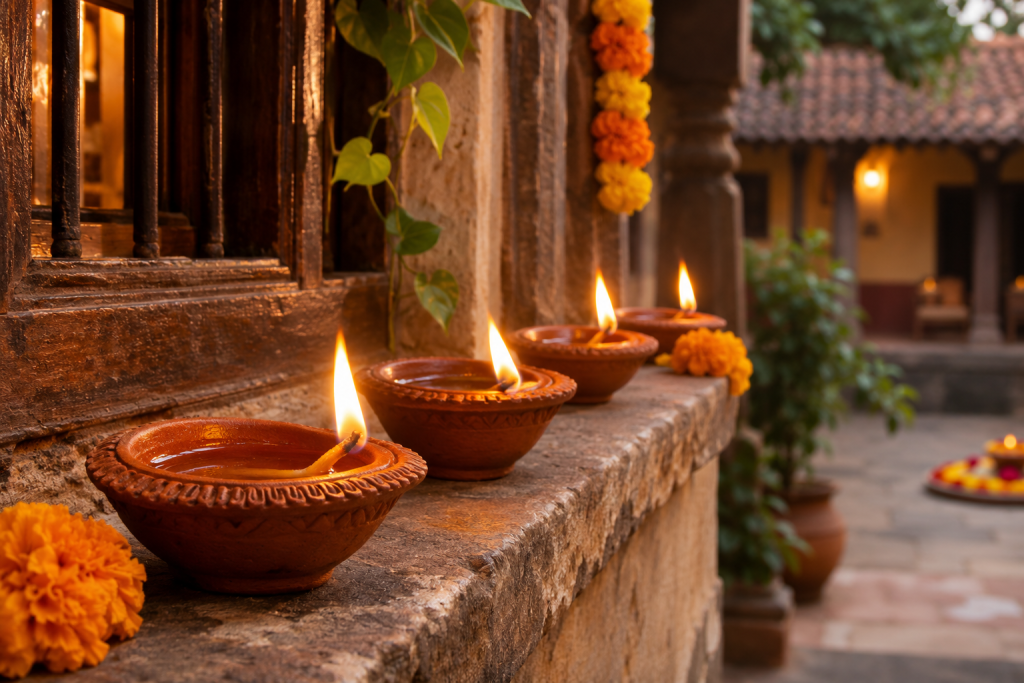
Deepawali is known for its light and its lamps. Since ancient times, we have used earthen lamps of different shapes, filled with sesame or mustard oil and fitted with cotton wicks. Earthen lamps are environmentally friendly.
When an oil lamp is lit with a cotton wick, its gentle glow increases positivity and energy in the surroundings. Looking at this light also helps balance agni, the fire principle in the body, at both physical and mental levels.
Our traditional texts call the practice of looking steadily at a lamp flame for a fixed period Jyoti Trataka. This practice helps children improve their concentration, discipline and intellectual ability.
During Deepawali, when the body’s agni works properly, food is digested well and strength improves. This is why lighting lamps during this period is considered so important.
Today, LED lights often replace traditional lamps. Social media frequently promotes LED diyas as a way to save money and avoid the effort of using oil. However, LED light is intense. Its colour temperature is generally around 2,400 to 2,700 Kelvin, while the light from an oil lamp is around 1,850 to 2,000 Kelvin.
The light from an oil lamp improves sleep quality and helps calm the mind. Looking at this kind of light at night can therefore help you sleep well. In earlier times, a ghee or oil lamp was often lit in the bedroom of someone who had difficulty sleeping. This light also helps the body release melatonin.
Therefore, instead of getting carried away by new options, it is better to light oil lamps during Deepawali. Besides this, several harmful effects of LED lights on nature are now becoming visible.
We may decorate our homes with electric lights and strings of lights for Deepawali. Along with this, it would be better to understand the true meaning and message of light.
Rangoli
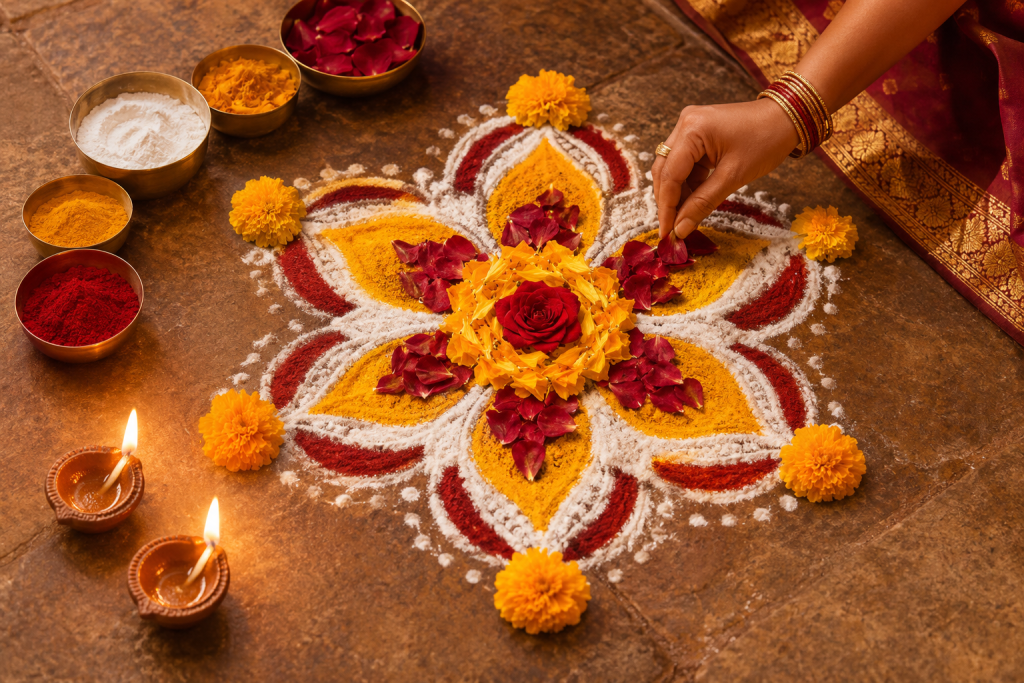
Beautiful rangoli designs bring great joy during festivals. Any form of art also helps create a positive state of mind.
In earlier times, rangoli was made using rice flour, turmeric, kumkum, grains, flowers, chalk, sand and similar materials. Today, synthetic pigments are used to make rangoli colours, and these also contribute to pollution.
Of course, these colours make today’s rangoli look more attractive. However, when making rangoli at home, it is better to use natural materials wherever possible.
Projected rangoli designs are now being widely promoted. But this kind of rangoli neither expresses our artistic skills nor shows the importance of colours. Instead, it only adds to light pollution. We therefore need to consider whether it is appropriate to create light pollution during the festival of light.
The Sound and Sparkle of Firecrackers
Firecrackers are a very important part of Deepawali. Traditionally, it is said that their sound reduces the presence of negative forces around us. In fact, insects and other small organisms increase greatly during this season, and firecracker smoke helps control them.
In earlier times, firecrackers were simple. Small crackers were made using gunpowder along with natural materials. They were therefore used in smaller quantities, and adults would take the children along and set them off together.
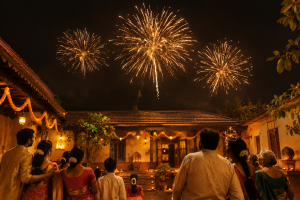
Today, pyrotechnics—the art of making fireworks—has advanced considerably, and many different chemicals are now used. Fireworks have become extremely popular because they can produce different colours and shapes, rise into the sky and burst after a set time.
Fireworks that keep going for thirty seconds to two minutes after being lit have become easily available. As a result, both the attraction of fireworks and the money spent on them have increased. Naturally, this has also led to a considerable increase in noise, water and air pollution.
Everyone needs to understand that reducing pollution is necessary. It is therefore better for each of us to decide how many firecrackers to use.
At Atmasantulana, around seventy to one hundred of us come together for a shared fireworks celebration. The fireworks are set off at a fixed time for everyone. Instead of each family bursting crackers separately, we celebrate together. Everyone enjoys the fireworks, while this approach also helps reduce pollution.
Housing societies in cities could also help reduce pollution by making similar decisions.
Green crackers are now available in the market as well. These do not use substances such as barium nitrate, lead, arsenic and mercury. They also produce sound at lower decibel levels.
After bursting crackers, it is important to clean the area and sprinkle a little water. Sprinkling water helps with cleaning and reduces some of the dust and chemical particles that spread into the surroundings.
Everyone should also remember that water pollution is caused not only by firecrackers but by the use of any chemical substance. Pesticides and fertilisers used in farming, the manufacture of utensils, electronic equipment, vehicles, modern medicines and industrial activities all contribute to such pollution.
We should therefore also consider what can be achieved by controlling firecrackers only during Deepawali.
The Joy of New Clothes
In earlier times, most families would buy a length of good-quality cotton fabric during Deepawali and have new clothes stitched for everyone. Silk clothes were also worn.
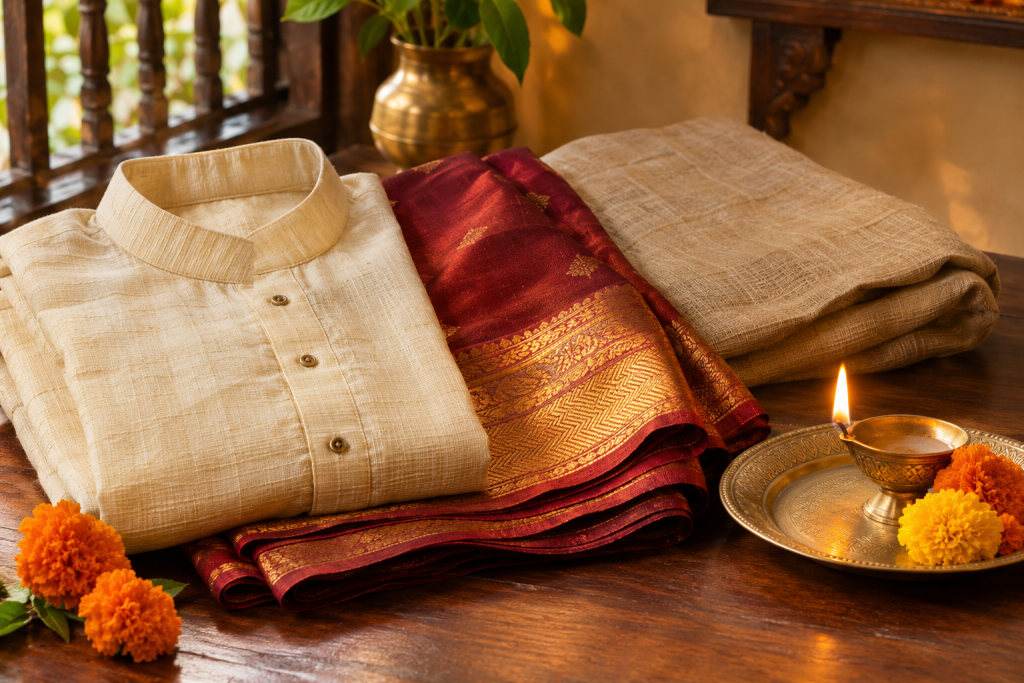
Cotton and silk clothes are good for physical health as well as for nature. Today, however, many garments are made using artificial fibres. Once these clothes become old and are thrown away, they cannot break down in nature, leading to considerable pollution.
Therefore, during a festival of light such as Deepawali, my heartfelt request is that we give preference to clothes made from natural fibres when buying new outfits. It is better to wear clothes made from cotton, silk, linen, bamboo, hemp and similar fibres.
Deepawali Faral
When we think of Deepawali, the first things that come to mind are chakli, kadboli, karanji, shankarpale, sev, chivda, laddoos and anarse. But the biggest question is whether we should eat these fried foods.
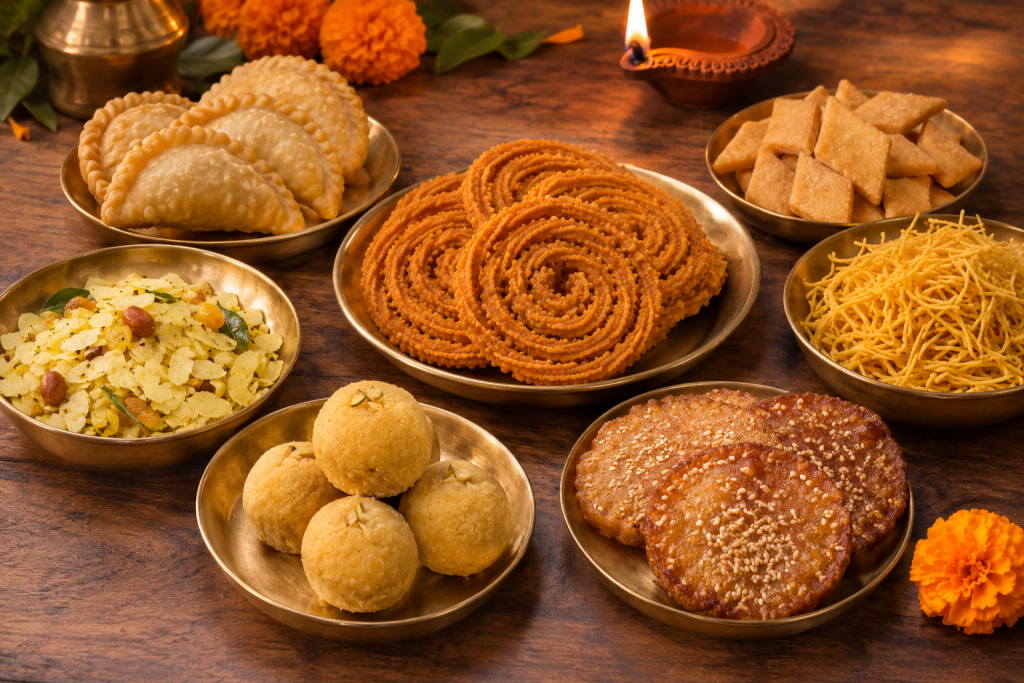
The traditional celebration of Deepawali has been planned with our health in mind. The recipes prepared during this festival therefore help improve our health. First of all, it is better to follow the traditional recipes.
Secondly, rather than buying ready-made faral—the festive sweets and savouries—it is better to prepare and eat whichever items we can make at home. This allows us to use good-quality ingredients. We can also ensure that the oil and ghee used for frying are of good quality.
Once oil has been used for frying, it should not be reheated to fry something else, because this produces trans fats, which have harmful effects on the body.
When buying ready-made faral, we cannot assume that the oil has been changed regularly or that good-quality oil has been used. This greatly increases the possibility of illness.
Most importantly, faral is meant to be a part of our breakfast. It does not mean sitting down and eating a plateful of shankarpale or feasting on chirote. All these foods should be eaten in small quantities.
Chakli and kadboli are best eaten with butter. Sev and chivda can be sprinkled over poha or upma.
In this way, eating good-quality faral in the right quantity and at the right time can certainly benefit your health.
Overall, Deepawali is a festival planned with our complete well-being in mind. When celebrated properly, it allows us to benefit from the traditional practices described in our texts.
Otherwise, our minds will remain caught up in endless debates about how Deepawali should be celebrated, and we will miss this beautiful opportunity that nature has given us.
Let us therefore celebrate this festival of light with an understanding of how to make it beneficial for our health and our agni.
Beautiful. 😊
Contemporary approach to Deepawali. Justifies the name “Santulan” . 🙏🙏😊
Happy Diwali. 😊